High-Achieving and Exhausted: How to Build a Career That Funds Your Life Without Consuming It

How to Build a Career That Funds Your Life Without Consuming It
Let's start with the uncomfortable truth: A lot of people in their 20s and 30s are "doing everything right" and still feel tired all the time.
You got the job. You're making more money than you ever have. Your LinkedIn looks respectable.
And yet, something feels off.
You're not fully burned out, but you're not energized either. Work bleeds into everything. Free time feels thin. Even the wins don't land the way you thought they would. It can feel like you're constantly moving forward, but not necessarily steering.
If that sounds familiar, you're not broken, and you're definitely not lazy. Most high-achieving professionals aren't struggling because they lack ambition. They're struggling because they're moving quickly on a path they didn't fully choose.
A sustainable career isn't just about making more money. It's about how money, time, values, and long-term life plans actually fit together—understanding why work is important to you and ensuring your work purpose aligns with your life. When one of those starts running the show, exhaustion usually follows.
Lifestyle Inflation vs. Lifestyle Intention
Here's how lifestyle inflation usually happens—not dramatically, just quietly.
You get a raise. Your rent goes up. You start ordering in more because you're tired. You say yes to things because you "can afford it now."
None of this is irresponsible. It's normal. But over time, your life gets more expensive, and suddenly that higher salary doesn't feel like freedom anymore. It feels like pressure.
The problem isn't spending money. It's spending without asking what you actually want your life to look like.
Lifestyle intention flips the script. Instead of letting your income decide your lifestyle by default, you decide what kind of life you want, and then use money to support it.
That might mean paying more for housing because location really matters to you. It might mean spending less on convenience so you can work fewer hours. It might mean choosing flexibility over prestige, or prestige over flexibility, on purpose.
There's no right version. The point is choosing instead of drifting.s something I strive for in my work with the unique challenges of immigrants and South Asian clients.

Time Freedom vs. Financial Freedom
A lot of us were taught that the goal is financial freedom: Make more now, grind a little, and freedom will come later.
But here's the thing: Money without time doesn't always feel like freedom.
Plenty of people are well-paid and still feel trapped. Their calendar owns them. Their job follows them home. Taking a real break feels impossible. At that point, more money just raises the stakes—it doesn't fix the problem.
Time freedom is harder to measure, but easier to feel. It's the ability to log off. To make plans without checking your work email. To have space for your health, your relationships, and your actual life.
Early in your career, trading time for money can make sense. You're learning fast. You're building skills. But at some point, it's worth asking if this pace is something you want to maintain, or if it's just something you've gotten used to.
Long-term, the goal isn't maximum income at all costs. It's enough income plus options.
Values-Based Decisions, Not the Cringey Kind
Values-based decisions can sound vague or idealistic, but in real life, they're very practical—especially when it comes to finding purpose at work.
Your values show up in the tradeoffs you're willing to make: How much stress you tolerate. How unpredictable your schedule can be. How closely your job purpose needs to align with your sense of meaning. How much control you want over your time.
When those things are out of sync, you don't always crash and burn. You just slowly drain. You start feeling tired in ways sleep doesn't fix.
Values-based thinking isn't about chasing passion. It's about being honest about what costs you're okay paying right now.
Every job gives you something and takes something. The real question is whether that exchange makes sense for this season of your life.
This kind of self-reflection is often where things start to shift. When you get clear on your values and the tradeoffs you're willing to make—including what gives you a sense of purpose at work—you stop feeling like your career is happening to you. You start feeling like you're making intentional choices, even when those choices are hard.
That's the difference between being carried by momentum and actually driving your career. The work doesn't magically get easier, but it starts to feel more grounded, more deliberate, and more aligned with the life you're trying to build.
Thinking in Life Architecture, Not Just Career Moves

This is where most career advice falls short: It treats your job like it exists in a vacuum.
It doesn't.
Your career shapes where you live, how you spend your time, who you have energy for, and what your future options look like. Over time, it impacts your health and your identity more than most people expect.
Thinking in terms of life architecture means zooming out. Instead of asking whether this is a good move, you ask what this sets you up for long-term. Does this give you more flexibility or less? Is this building something sustainable, or just impressive?
A good career isn't one that constantly demands more from you. It's one that can adjust as you change, without forcing you to start over every time your priorities shift—one where working with purpose and purpose in the workplace feel sustainable rather than depleting.
What Does a Sustainable Career Actually Look Like?
A sustainable career balances multiple dimensions of your life without requiring you to sacrifice everything for one. Here are the key elements:
Financial stability that supports your actual life goals, not just an impressive salary that requires constant stress to maintain
Time boundaries that protect your energy, allowing you to be present in your relationships and personal life
A clear sense of career purpose that aligns with your values, so you understand not just what you do, but why it matters to you
Flexibility to adapt as your life evolves, without having to completely rebuild from scratch
Work that utilizes your strengths while leaving room for growth and learning
A realistic understanding of the purpose of work in your life—whether it's primarily for income, identity, impact, or a combination
Redefining "Enough" Without Giving Up Ambition
Let's be clear: Money matters. Wanting financial stability doesn't make you shallow. It makes you realistic.
But money can't be the only metric. When it is, people end up chasing numbers without checking whether those numbers actually support the life they want.
Defining what enough looks like for you is powerful. It stops the constant comparison. It gives your ambition direction instead of letting it run on autopilot.
Now What?
If you're high-achieving and exhausted, that doesn't mean you're failing. It often means you've been moving fast without checking who's actually in control. Many of us end up in the passenger seat of our own careers, reacting to momentum, expectations, and timelines we didn't consciously choose.
Getting back into the driver's seat usually doesn't happen overnight, and it's rarely something people want to do alone. That kind of reflection is easier, and honestly more sustainable, when it happens in community with others asking the same questions.
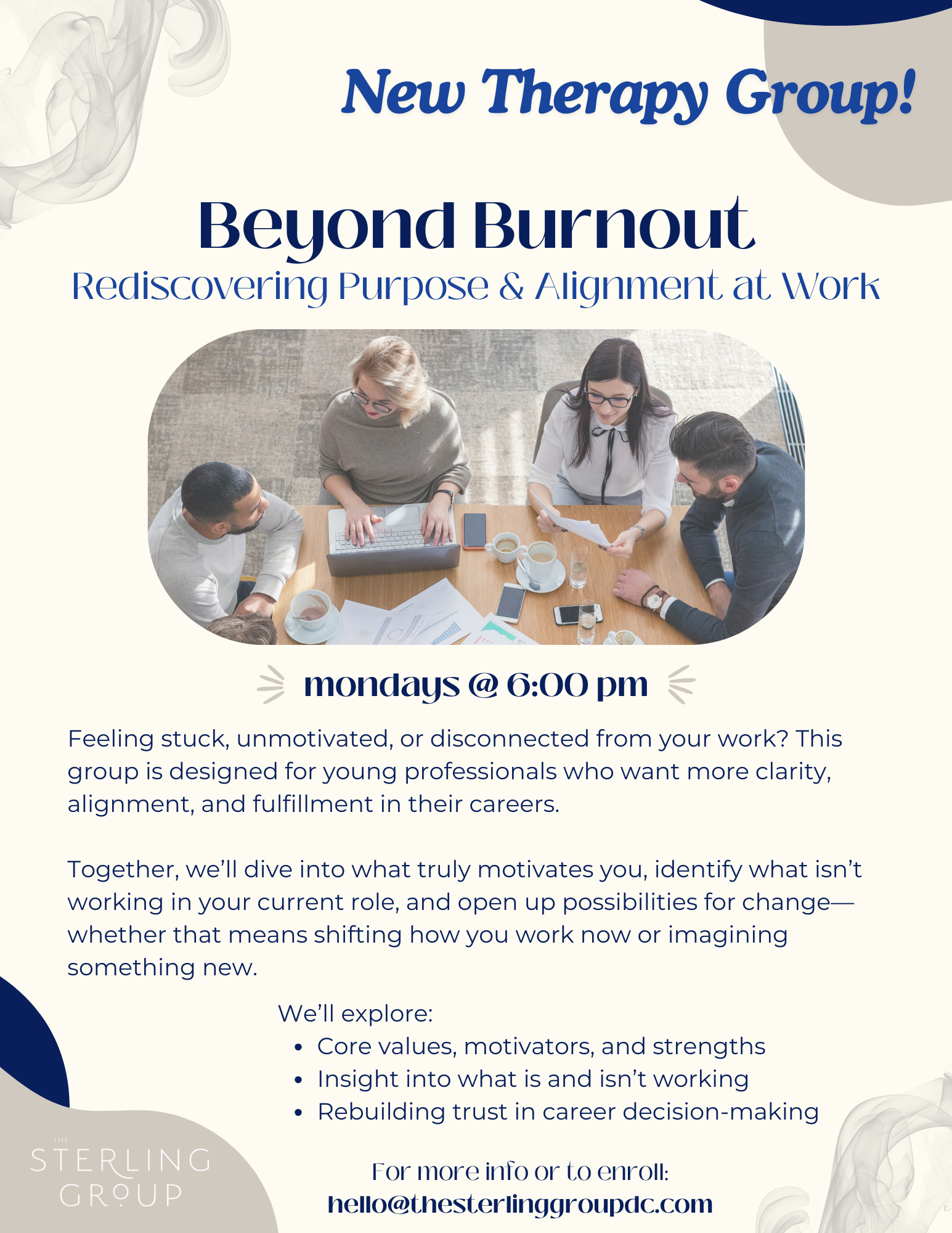
That's exactly why we're starting the Beyond Burnout Group on February 2, 2026, to help people like you figure out the next right move. The group will meet in person on Mondays at 6:00 PM for eight weeks, and it's designed to be a safe, thoughtful space to slow down, reflect, and intentionally design what comes next. You'll be alongside peers navigating similar pressures around work, money, time, and identity—without judgment or comparison.
If you've been feeling stuck, tired, or like your career is quietly driving your life instead of supporting it, this group is an invitation to pause and recalibrate. Not to abandon ambition, but to aim it more deliberately—with clarity, support, and room to breathe.
Sometimes the most powerful career move isn't a new job. It's choosing to be intentional about the one you're building—together, taking the driver's seat and steering it toward the life you actually want.
———————————————————————————————————————————————————————————
About the Author
Hillary is a therapist who brings a collaborative and grounding approach to helping clients navigate life's complexities with greater clarity and intention. She specializes in supporting individuals through life transitions, identity changes, and challenges related to motivation, relationships, and boundaries. With particular expertise in anxiety, trauma, OCD, depression, adoption, men's issues, relationships and dating, attachment issues, and identity exploration, Hillary creates a therapeutic space that honors each client's unique experiences and perspectives. Her integrative style balances reflection with action, encouraging clients to explore the deeper meaning behind their experiences while simultaneously building practical tools for emotional regulation and relationship building. Hillary is passionate about helping people align their choices with their core values, whether they're re-evaluating career paths, seeking better balance, or imagining their next life chapter. She views therapy as both a creative and structured process that fosters resilience and intentional living. Through this values-centered approach, Hillary empowers clients to deepen their self-understanding and make confident decisions that reflect who they are and who they're becoming. Her work ultimately aims to help people navigate daily challenges while staying connected to what truly matters most in their lives.