
How Trauma-Informed Couples Counseling Helps Break Unhealthy Patterns During the Holidays

Why do couples struggle more during the holidays?
Despite what your Instagram feed may show, couples often struggle more during the holidays because this season activates old attachment wounds, family-of-origin histories, financial stressors, overstimulation, and expectations that collide with each partner’s internal survival strategies. Trauma-informed couples counseling helps partners understand these invisible forces, communicate with compassion, and interrupt reactive patterns before they escalate.
How can trauma shape the ways couples experience the holiday season?
Trauma—whether attachment trauma, relational trauma, or family-of-origin patterns—can shape how partners interpret holiday triggers, manage emotional stress, and respond to conflict. During the holidays, unresolved trauma often resurfaces because this period mirrors past relational dynamics, increases pressure, and reduces access to routine coping skills.
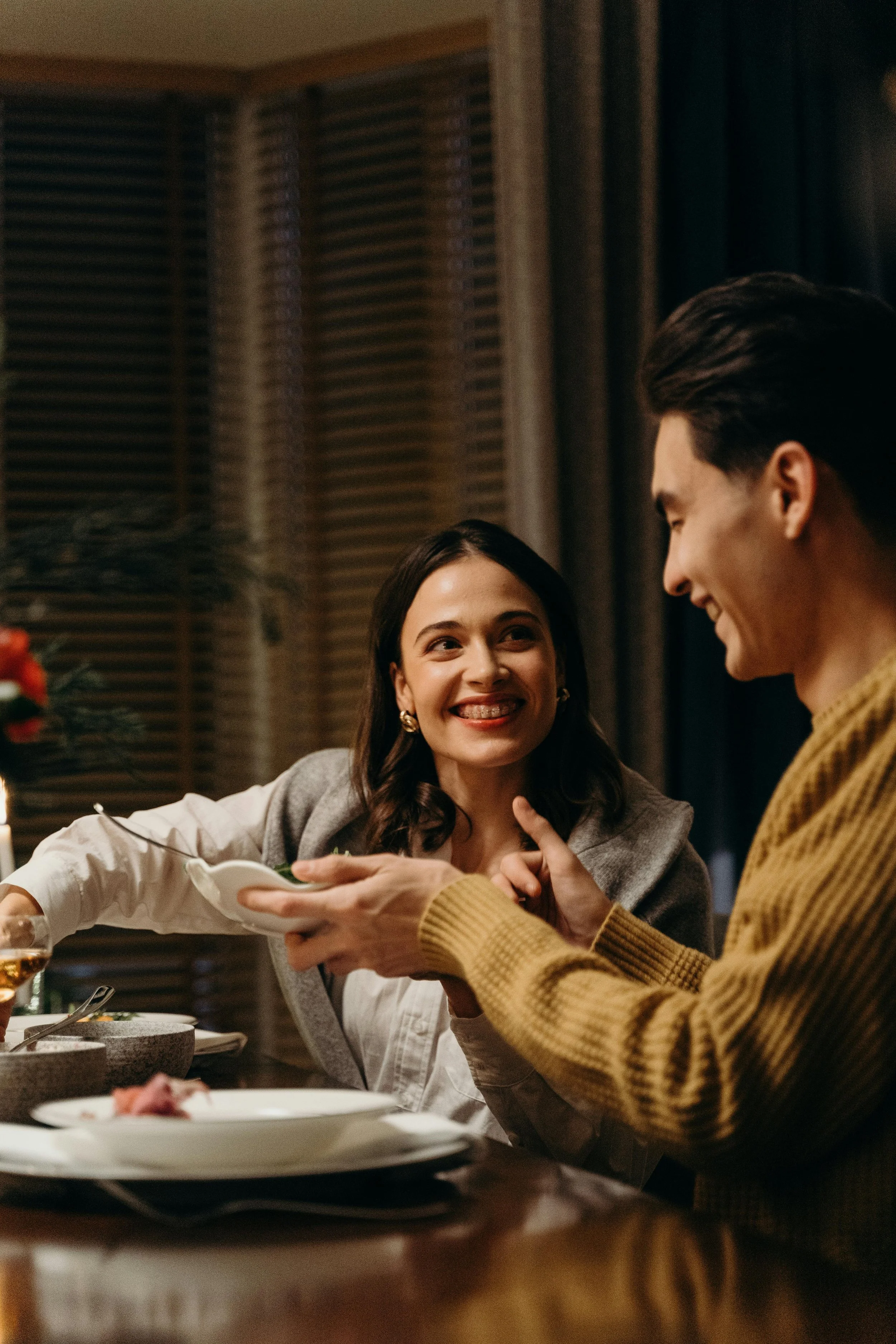
How trauma can impact relationships during the holidays:
Heightened anxiety or irritability around family gatherings
Fear of disappointing others or being “too much / not enough”
Hypervigilance in chaotic or overstimulating environments
Shutdown, withdrawal, or dissociation when overwhelmed
Arguments about spending time with one family over the other
Old power dynamics resurfacing (control, caretaking, perfectionism)
Overfunctioning/underfunctioning patterns becoming extreme
Difficulty setting boundaries with family of origin
Guilt, shame, or pressure to “perform happiness”
Increased sensitivity around gift-giving, finances, or traditions
Feeling emotionally unavailable or misunderstood
Conflict when one partner seeks closeness and the other seeks space
What makes trauma-informed couples counseling different from traditional couples therapy?
Trauma-informed couples therapy differs because it recognizes that partners aren’t just reacting to each other—they’re reacting to their histories. A trauma-informed therapist helps couples understand their nervous systems, attachment styles, and trauma responses, shifting the focus from blame to understanding and collaboration.
What to expect in a trauma-informed couples counseling session:
Regulation first, conversation second
Curiosity over criticism
Slowing down reactivity
Emphasizing safety, pacing, and empowered choice
Identifying trauma-rooted patterns instead of “bad behavior”
What specific patterns show up in couples during the holidays—and how do we interrupt them?
Typical holiday conflict patterns stem from deeper attachment dynamics—like pursuer/withdrawer cycles, conflict-avoidance, people-pleasing, or perfectionism. Trauma-informed couples counseling interrupts these patterns by helping partners identify triggers early, communicate emotional needs clearly, and create shared strategies for staying connected.
What are some common patterns that arise for couples during the holidays and what trauma-informed interventions can help?
Pattern: Overcommitment + burnout
Intervention: Use Gottman’s “Stress-Reducing Conversation” to share what’s overwhelming without problem-solving.
Pattern: Arguments about whose family to visit
Intervention: Apply Harville Hendrix’s Imago Dialogue to surface childhood meaning beneath each preference.
Pattern: One partner shuts down in group settings
Intervention: Introduce window of tolerance mapping and create a co-regulation plan.
Pattern: Gift-giving misunderstandings
Intervention: Use Gottman’s Love Maps to connect around the emotional meaning of gifts.
Pattern: Old family wounds activated
Intervention: Practice some Esther Perel-informed differentiation work: “Your family’s story is not our relationship.”
What strategies from the Gottman’s help couples stay connected during holiday stress?
The Gottmans’ research emphasizes emotional attunement, appreciation, and stress management—tools that directly buffer couples against holiday overload. Using their evidence-based exercises, partners can stay connected, reduce emotional flooding, and prevent conflict escalation.

Gottman-based interventions to try this holiday season:
Rituals of Connection: Create a daily 5-minute check-in between events
Turning Toward Moments: Seek micro-bids for closeness during high-stress times
Shared Meaning Rituals: Choose 1–2 meaningful traditions to protect
The Stress-Reducing Conversation: Normalize external stressors instead of blaming each other
De-escalation Tools: Time-outs, soft start-ups, repair attempts
What can couples do right now to prepare for a relationally-healthy holiday season?
Couples can prepare by creating proactive rituals, clarifying boundaries, mapping triggers, and building strategies that support regulation and connection. Trauma-informed preparation minimizes reactive patterns before they arise and strengthens the partnership as a unit. Goooo team!
Practical tools to implement this week:
Holiday Trigger Map (Window of Tolerance exercise)
Partners’ Emotional Needs Inventory
Shared Holiday Mission Statement
Boundary Script Templates for Family Events
Co-Regulation Toolkit (breathing, grounding, safe words)
30-Minute Weekly State of the Union check-ins (a tried and true Gottman technique)
So, how can trauma-informed couples counseling transform your holiday season?
Trauma-informed couples therapy transforms the holiday season by helping partners understand their triggers, deepen their emotional connection, navigate family dynamics, and enter the season as allies—not adversaries. With the right tools, couples can break generational patterns and create holidays that feel safe, intentional, and genuinely joyful.
———————————————————————————————————————————————————————————
About the Author
Katie Jacobi is a licensed professional counselor and Level-1 Trained IFS therapist. She’s passionate about helping young adults to better understand themselves, adapt, heal, and ultimately integrate past experiences into a brighter future. Katie works with both individuals and couples. She’s a self-proclaimed “psych nerd” and is constantly learning new skills, and evidence-based practices to help tailor her approach to the individual or individuals in front of her, being able to meet them where they are at. If you’re interested in working with Katie for Internal Family Systems Therapy or traditional counseling, reach out to TSG for a free 15-minute consultation today!